Books Trending News – Guaripete | Online Store |
- 305. More from RT 2018: There Are Some Books Around Here, and Some Creepy Dolls
- Tartan, Ghosts, & More
- Tipping the Scales
- Not So Identical
- On Jonas Mekas: An Exchange
- The Hardest Guess-The-Writer Quiz
- Greek Tragedy in the Laundromat
- What Comes After Idealism?
| 305. More from RT 2018: There Are Some Books Around Here, and Some Creepy Dolls Posted: 29 Jun 2018 07:04 AM PDT  It's time for part two of my recordings from Romantic Times 2018. We're chatting about RT while we were still there over lunch and wine – ah, the delays of extensive editing. We have several meandering conversations – and some bits you may have heard in our live show, too. We talk about books, our pets, books, publisher news at RT, and random other things. We cover why the hitman plot works for Elyse but not for Sarah, and why Elyse thinks m/m spy and adventure stories are popular. I ask Amanda and Elyse, who are younger than I am, about their impressions and understanding of category romance. We talk about gothic, horror, and suspense – though keep in mind, I'm as full of crap as anyone when it comes to discussing trends. And of course, we talk about what was with the doll in Amanda's mom's walk in closet. Important! SPOILER 13:35 – 14:00 for Iron Druid series. Heads up! Skip ahead 30 seconds if you don't want to be spoiled for the end of the series, ok?
|
| Posted: 29 Jun 2018 07:04 AM PDT 
Don’t want to miss an ebook sale? Sign up for our newsletter, and you’ll get the week’s available deals each Friday. The post Tartan, Ghosts, & More appeared first on Guaripete. |
| Posted: 29 Jun 2018 07:04 AM PDT  If Donald Trump's nominee to replace Justice Anthony Kennedy, who announced his retirement on June 27, is confirmed by the Senate, the Supreme Court will have a stable majority of conservative justices for the first time since before the New Deal. Kennedy's successor will be Trump's second Surpreme Court pick and may not be his last. Justice Ruth Bader Ginsburg, who is eighty-five, clearly wishes to stay on the Court as long as Trump is president. So does Justice Stephen Breyer, who turns eighty later this year. But neither is immortal. Especially if Trump is reelected, he could potentially replace both of these justices with staunch young conservatives.  The current Court's four consistent conservatives are all substantially younger than Kennedy, Ginsburg, and Breyer. The oldest, Clarence Thomas, is sixty-nine. Samuel Alito is sixty-eight, Chief Justice John Roberts is sixty-three, and Neil Gorsuch is just fifty. All are self-described constitutional originalists; all favor interpreting statutes based on text rather than their intention; and all have strongly pro-business judicial records. Should Trump appoint a fifth conservative—to say nothing of a sixth or seventh—the conservative majority could easily last a generation. In light of this prospect, it is not too soon to start asking what a conservative Supreme Court would mean for the country. A conservative jurisprudence, aggressively applied, would reshape American law and politics. It would reinterpret fundamental issues of individual and privacy rights, health care, employment, national security, and the environment. These changes would in turn affect electoral politics. The range of conservative legislation that could survive judicial review would expand, while the range of progressive legislation that could do so would narrow. In retrospect, it is remarkable that a strong conservative majority on the Court has not emerged before now. Since 1980, Republicans have held the presidency for twenty-two years and Democrats for sixteen. Ronald Reagan, who campaigned on the platform of choosing conservative judges, appointed three justices—Antonin Scalia, Sandra Day O'Connor, and Kennedy—and elevated William Rehnquist to the chief justiceship. That should have established conservative control. Yet O'Connor turned out to be a centrist, controlling the Court for a quarter-century by casting the decisive fifth vote in controversial cases. When she retired in 2006, Kennedy assumed her position as the swing justice and unexpectedly emerged as a liberal hero, voting, for example, to extend constitutional rights to detainees in Guantánamo Bay and marriage rights to same-sex couples.1 George H.W. Bush also had the chance to consolidate a conservative majority. He appointed Thomas to replace Thurgood Marshall but also replaced William Brennan with David Souter, who underwent a subtle yet significant evolution from Burkean conservative to Burkean liberal. Bill Clinton, George W. Bush, and Barack Obama each got two justices confirmed, which maintained the Court's balance. That conservative control has been so long in coming reflects either miscalculation by Reagan and George H.W. Bush or (more likely) something less than full-throated judicial conservatism on their part. There is one glaring anomaly in the pattern of appointments. Obama should have been able to get Merrick Garland confirmed after Scalia died in February 2016—which would have provided some insulation against a conservative majority. The Senate's decision to block the moderate Garland purely because Obama nominated him transformed both the composition of the Court and the norms of the confirmation process. A Senate controlled by Democrats would probably refuse to confirm any Trump Supreme Court nominee, no matter how much time remains in his presidency. If justices can only be confirmed when the president and the Senate majority come from the same party, we will witness a shrinking Supreme Court forced to operate with eight, seven, or even six justices. In this scenario, a president whose party controls the Senate would have the chance to fill all those vacancies with justices who share his or her ideology. The Court's politics would no longer drift gradually but veer suddenly to the left or the right. One of the first things likely to happen if the Court's majority turns conservative is that state legislatures in heavily Republican states will pass legislation restricting abortion rights. Already, Mississippi has passed a law barring abortions after fifteen weeks—long before viability. A federal court blocked the law, but its passage signals clearly that the Court will come under pressure to revisit Roe v. Wade. In the past, Chief Justice Roberts has shown a decided preference for changing constitutional law indirectly. Rather than overturning landmark liberal precedents outright, he prefers to minimize their importance by narrowing them and limiting their holdings to factual situations that no longer exist. He would surely prefer that Roe suffer death by a thousand cuts rather than see the Court accused of overturning it in a stroke and casting the country back to the days of coat-hanger and back-alley abortions. Yet the chief justice is only first among equals. The Court's other conservatives have already shown a willingness not to follow his lead, as occurred in the Affordable Care Act case, NFIB v. Sebelius, when they left Roberts alone in upholding the ACA's individual mandate. Given the assertive ideology, cohesive political views, and no-holds-barred style of many younger judicial conservatives, a conservative majority could be expected to reverse Roe as long as Roberts concurred in the decision, regardless of whether he joined the opinion. For pro-choice advocates, the fall of Roe would be a disastrous defeat. Brown v. Board of Education was controversial when decided but gained wide acceptance over time. The Roe decision has never achieved a similar consensus. Many Court observers, including Ginsburg, have suggested that it generated lasting controversy because the Court decided it without first laying the foundation with prior incremental decisions. As a result, since 1973, pro-choice advocates have been fighting a rearguard action to defend the right to abortion. For Roe to be overturned would be the ultimate failure of nearly half a century of pro-choice strategy. The aftermath of a decision striking down the right to abortion would be complicated. Democrats would have to convince majorities in each state to protect abortion. It could become impossible for women to obtain legal abortions in the numerous states that have tried to enact more restrictive abortion laws in recent decades (only to have them struck down by the courts). Abortions could be outlawed in much or all of the South, the Southwest, and the intermountain West. Those with means would still be able to travel to states that permitted them, but women too poor or young to travel would find it vastly harder to end unwanted pregnancies. Many people would probably react by taking to the streets, organizing, and voting against such restrictive laws and the politicians who put them in place. Abortion rights would immediately become a wedge issue for Democrats. Their goal would be to push women who might otherwise vote Republican into the Democratic column. Once abortion rights were constitutionally recognized, liberal efforts in connection with them were, rationally enough, redirected to preserving the composition of the courts, rather than actively trying to convince those who rejected such rights to change their views. For as long as abortion has been legal, conservatives, for their part, have been able to count on the crucial votes of centrists who prefer conservative candidates but quietly want to preserve the option of abortion. With Roe overturned, Republicans might lose the 34 percent of their voters who believe that abortion should be legal in most or all cases. Just as liberals would no longer be able to rely on the Supreme Court to strike down anti-abortion measures, they would have to concentrate on winning elections and lobbying members of Congress to secure other rights that they are currently seeking to win in court. At present, the fight for transgender rights is heavily aimed at convincing judges to extend existing antidiscrimination protections to transgender people. Because a conservative Supreme Court would not in the foreseeable future do so, progressives would have to lobby Congress and state legislatures for such protections. Over time, the fight could well prove successful. As the example of gay marriage shows, changes in values can eventually take place and even come to be broad-based. Support for gay marriage has risen steadily for twenty years, from 27 percent nationally in 1996 to 64 percent in 2017. Remarkably, the shift can be discerned even among evangelicals born after 1964, 49 percent of whom now believe gay marriage should be legal, compared to just 35 percent of all evangelicals. For this reason, gay marriage may be one significant progressive rights victory that could survive even a conservative majority on the Court. Emboldened conservative state legislators might try to pass new laws contravening the Obergefell precedent and restricting marriage to one man and one woman. Yet the political cost of such efforts would probably be extremely high, as not only liberals but also mainstream corporate interests would respond with state-level boycotts. Some conservative justices could potentially accept gay marriage as a fait accompli, given how quickly attitudes toward it are changing. A conservative Court would no doubt allow religious liberty exemptions for merchants who do not wish to serve gay couples.2 But if gay marriage remains the law of the land, such exemptions will come to be seen as compensatory concessions to the losing side in a culture war, rather than steps toward reversal of the right to marriage. In addition to rolling back existing constitutional rights, a conservative Supreme Court could block progressive government programs. One example is affirmative action. Over decades, the Court has used the right to equal protection of the laws to whittle down affirmative action until its only important remaining application is in higher-education admissions. In 2016, to the surprise of many observers, Kennedy cast the deciding vote to preserve this practice—despite having dissented thirteen years earlier when O'Connor used her swing vote to reach the same result.3 A conservative majority unconcerned with diversity as a social good in itself would not find it difficult to bar affirmative action altogether on the principle that white or Asian applicants are treated unequally when race is a factor in admissions. Unlike in the case of abortion rights, there would be no way for states to get around a constitutional ban on affirmative action. Two responses would probably follow such a decision. Progressive students would protest vociferously; and administrators who have come to believe in the value of diversity as a good in itself would seek new ways to create diverse student bodies without formally taking account of race. Economically based affirmative action could be combined with school-based admissions quotas (such as admitting the top few percent of students from some schools or regions) that are formally race-neutral but track racial demographics. Universities could also invest in college preparation for underprivileged middle and high school students and actively recruit strong minority students. A conservative Court majority could conceivably seek to limit and even overturn other progressive legislation by restricting the legitimate scope of the states' or Congress's activities. In some respects, it might bring the Court closer to the libertarian, property-protecting constitutional interpretation of the early twentieth century. In the Lochner era, so-called after a 1905 decision blocking a New York State maximum-hours law for bakers, the Court struck down much progressive state legislation as violating the liberty of contract, a right it found in the due process clause of the Fourteenth Amendment. Then and now, libertarian judicial activism entails blocking legislation that is thought to interfere with the ability of supposedly free economic actors to make economic decisions and form contractual relationships as they choose. Libertarian thinking is alive among the conservative justices. In 2010, for example, the law professor Randy Barnett argued that the individual mandate of the Affordable Care Act was unconstitutional because it required people to do something they were not doing—buying insurance—rather than regulating something they were already doing. Nearly all legal scholars found Barnett's libertarian distinction between action and inaction constitutionally meaningless. The conservative justices embraced it, however, holding the mandate unconstitutional as beyond the authority of Congress under the commerce clause; Roberts and the four liberals voted to sustain the mandate on the grounds that it was part of Congress's taxing power. But the conservative justices would be very unlikely to go back to Lochner explicitly. The repudiation of the liberty-of-contract jurisprudence that characterized the Lochner era is still an important part of constitutional orthodoxy. Antonin Scalia held up the Lochner decision as the very model of bad jurisprudence, and frequently accused liberals like Kennedy of inventing constitutional rights in the vein of Lochner. A conservative court would be likelier to practice a less radical version of judicial activism, one in which the justices opportunistically use existing doctrinal tools to undermine progressive legislation. Roberts, for instance, invoked states' rights to block the Medicaid expansion proposed in the ACA. He held that Congress's threat to revoke states' Medicaid funding unless they accepted expansion amounted to an unconstitutional form of coercion. Similarly, in Shelby County v. Holder (2013), Roberts struck down a substantial part of the Voting Rights Act by arguing that Congress had drawn on "forty-year-old facts" about racial discrimination in voting, rather than citing "current conditions," to justify extending the law. As a result, states and municipalities with long histories of racial gerrymandering can now redistrict without first submitting their plan to the Department of Justice for pre-clearance, as the Voting Rights Act requires. Faced with this sort of conservative judicial activism, liberals could find themselves thwarted in passing progressive social legislation. The hard case would arise if the legislation enjoyed substantial and durable national support and was nonetheless blocked by the Court. That is not what happened with the ACA; the law passed by a bare partisan majority, and the conservative justices merely helped undermine legislation that already stood on shaky political ground. It is what happened during the New Deal, when the justices' resistance led Franklin Roosevelt to try to pack the Court. The Court folded, and Roosevelt prevailed. Today's Court, however, enjoys more independence and public legitimacy than the Court that Roosevelt confronted did, and it is far from obvious that it would give in to Democratic pressure. Matters of national security—especially those that concern presidential power—would pose a problem for a conservative Court. Conservatives are torn between two competing views: one that grants the president near-monarchic authority when it comes to national security, and another that allows the president to be constrained by Congress. To complicate matters further, they have tended to support presidential power when the president is a Republican, while sharply limiting it when the president is a Democrat. This conflict was on view in Zivotofsky v. Kerry (2015), an important case about whether the president or Congress would have the final word about the passports of US citizens born in Jerusalem. Congress wanted passport bearers to be able to list their country of birth as Israel; the Obama administration wanted to maintain the status quo, in which the country of birth was given as "Jerusalem" to avoid taking a stand on the city's status. Ultimately, the Court held that the president could ignore Congress's command to allow Israel to be designated because his authority in foreign affairs includes the right to recognize foreign states. Unsympathetic to the Obama administration's assertion of executive power, Scalia dissented. He pointed out that under the established doctrinal framework, the president's power is at "its lowest ebb" when Congress has directly spoken. Thomas, also unsympathetic to Obama, dissented separately. But he insisted that the extent of the president's inherent powers, as the Constitution originally defined them, should be determined by looking at the royal prerogatives that the British king in principle possessed in the era of the founding.4  Outraged, Scalia accused Thomas of constructing "a presidency more reminiscent of George III than George Washington." Their disagreement went back to 2004, when Scalia and Thomas split sharply over whether the Bush administration could detain an American citizen without trial on suspicion of affiliation with al-Qaeda. Scalia thought this violated the basic right to habeas corpus; Thomas believed it fell within the president's national security power. A conservative post-Scalia Supreme Court would probably rule quite differently on presidential power and national security based on who the president was. It would be likely to defer to a conservative president, deploying Thomas's theory of the strong executive. That is essentially what happened in Trump v. Hawaii, the travel ban case, in which the conservative majority relied on what it called "core" executive power as an excuse to avoid the anti-Muslim bias that actually motivated the ban. If a liberal president tried to deploy unilateral executive power, however, the Court's conservatives might well fall back on the Scalia line of skepticism, insisting that Congress's competing powers are necessary to constrain the president. A Democratic president might then end up blocked by a conservative Court unless the Democrats controlled Congress. If Congress and the president agreed, even a conservative Court could be expected to defer to them on matters of national security. Conservatives might in fact be more deferential under these conditions than a liberal Court would be to a Republican president and Republican-controlled Congress, because they have at hand the Thomas argument for radical deference to the executive, which no liberal justice endorses. Such deference seems especially likely to occur if Trump has appointed the justices who control the outcome. Environmental regulation is the final area in which an activist conservative Court could have a substantial effect. The source of the Court's power here lies in the relationship between environmental legislation and regulation. In general, Congress has chosen to deal with the environment by passing very general laws and delegating the authority to implement them to regulatory agencies like the Environmental Protection Agency. An activist conservative Court could make life difficult for a Democratic EPA by blocking regulation directly, declaring it "arbitrary and capricious" under the Administrative Procedure Act. The courts are only supposed to use this tool to block actions that are genuinely irrational or that exceed the agency's legal authority; but the Court could deploy it much more aggressively than has been done in the past. In practice, environmentalists could try to get around such a judicial barrier by lobbying Congress to pass laws directing that a specific regulation be adopted, rather than delegating so much authority to the EPA. If public opinion were strongly enough in favor of increased environmental protection, a Democratic Congress and president could probably get some regulation adopted despite judicial resistance. A conservative Court could also impede environmental reform by second-guessing agencies' interpretations of federal law. According to what is known as the "Chevron doctrine," when federal law is ambiguous, the Court will defer to an agency's interpretation of the law provided it is reasonable. This doctrine is intended to give substantial power to agencies, binding the hands of judges who might otherwise disagree with the agencies' policies. Today Chevron is under attack, most prominently from Gorsuch, who has written disparagingly of the idea that courts would have anything less than full control over the meaning of federal statutes. This is bad news for environmental regulation—and that is almost certainly part of the point. A Court that does not defer to an agency's interpretation of federal law can substitute its own policy judgment for that of the agency. If that agency is the EPA, and its judgment is being used to expand environmental protection, then a conservative Court that overturned Chevron or weakened its rule of deference would stand ready to reverse the agency's course. The only solution for environmentalists would be to pass new laws that would expressly enact regulation, rather than delegating regulatory authority to the agencies. That would be hard to do, especially given the established norm that agencies rather than Congress do most environmental regulating. But if a conservative Court systematically uses statutory interpretation to block environmental regulation, that division of labor may have to change. Instead of making arguments to the EPA or other agencies, environmentalists would have to direct their efforts more directly toward Congress itself. A durable conservative majority on the Supreme Court could, then, impose substantial changes in American rights and law, especially in areas where liberals have in recent decades relied on courts and administrative agencies rather than Congress or state legislatures to implement progressive policies. Those who oppose such changes should begin considering the appropriate political responses, such as choosing which issues should be targeted for grassroots organizing and lobbying state legislatures and Congress. Ultimately, Democrats cannot rely on judges for social progress. A functioning liberal democracy requires a liberal populace that is prepared to vote for the policies it wants. The post Tipping the Scales appeared first on Guaripete. |
| Posted: 29 Jun 2018 07:04 AM PDT In response to:The Curse of Cortés from the May 24, 2018 issue To the Editors: Álvaro Enrigue states that the New Laws of 1542 gave colonial Mexico's "indigenous subjects rights identical to those of Spaniards" ["The Curse of Cortés," NYR, May 24]. This was far from the case. Various forms of forced labor continued to be inflicted upon the indigenous (encomienda, repartimiento). A special tax, known as tribute, was levied only on Indians. There was a wide variety of other restrictions placed on the indigenous, including being prohibited from riding horses, becoming priests, entering the university, wearing European-style clothing, residing in certain urban areas, and being forcibly settled in compact hamlets (congregation). Philip L. Russell The post Not So Identical appeared first on Guaripete. |
| Posted: 29 Jun 2018 07:04 AM PDT  In response to:I Was There from the June 7, 2018 issue  Jonas Mekas at Anthology Film Archives, New York City, 1987 To the Editors: A historian may have the responsibility to uncover facts that remain obscure and, in doing so, to correct even the memories of those who have witnessed or participated in the events in question. What he does not have the right to do is, even through mere implication, to use his questioning to impute guilt to any individual without positive evidence to support the charge. Nor is it justified to use the subject's unwillingness to discuss such matters to imply guilt. Jonas Mekas, whose accomplishments as a poet, writer, and filmmaker as well as a founder of the magazine Film Culture and Anthology Film Archives Michael Casper sets out at the beginning of his article "I Was There" [NYR, June 7], is evidently an unreliable narrator of the events he lived through during World War II. Casper points out that Mekas has spoken of the German occupation of Lithuania as having begun in 1942, when in fact it happened the previous year. It's strange that Mekas would so misremember an event that had such consequences for himself and his country, but what ulterior motive can be attributed to a misstatement that anyone can correct through a simple Google search? Casper seems sure that Mekas has something to hide. I should say a word here about my own parti pris. I write, first of all, as someone lucky enough as a teenager to have latched onto the Village Voice when Mekas was still writing there, and to have had my eyes opened to the potential of cinema before I'd even seen the films he was writing about. Later I got to know a small portion of Mekas's voluminous work in film and video; and, after I was told, on a visit to Vilnius in 2007, that in Lithuania Mekas was best known as a poet rather than a filmmaker, I sought out his translated poetry. Later I met him on a couple of occasions, and—without getting to know him well—found him to be the gentle and generous soul I imagined from his writing and filmmaking. I've contributed a brief essay on one of his early poems to a forthcoming Festschrift. Those of us who admire Mekas's films, writings, and personal kindness can hardly object to Casper's effort to reread his early writings in the context in which they were first published—publications Mekas later described simply as a "provincial weekly" and a "national semi-literary weekly" but that Casper clarifies were vehicles of, among other things, pro-German and anti-Semitic propaganda. Although it is a relief, though hardly a surprise, to learn of Mekas that, as Casper says, "none of his writings is anti-Semitic," it is dismaying to learn of their publication in such vicious company—though we probably shouldn't be surprised that this was the price of publishing anything at all, other than clandestinely, in occupied Lithuania. Casper quotes Mekas as saying that later, in 1943–1944, "he became involved in anti-German activity"—and Casper confirms that it was at this "late stage in the war" that "most anti-Nazi activism began to occur among Lithuanians." Still, he does not accept Mekas's account of having finally fled Lithuania on account of his fear of arrest by the Germans, suggesting instead that it was the advancing Soviets he was afraid of. Given that Mekas had been active against the Soviet occupation that preceded the arrival of the Germans, this is plausible, but Casper presents no evidence against Mekas's own explanation: he was afraid that a typewriter he'd been using to create a clandestine publication would be used to identify him. Casper cites the view of another authority, that 99 percent of those who fled Lithuania in 1944 were fleeing the Soviets, but this does not in itself throw any doubt on Mekas's account. And if he was equally afraid of both sides, as he undoubtedly had a right to be, would that materially change the story? Still, it's undoubtedly true that, as Casper complains, Mekas "has been elusive when he addresses the war years, about which he mixes up important dates." He seems to present himself as a witness to events he couldn't have seen and to have forgotten things he actually experienced. But Mekas's own explanation for his inaccuracies—the trauma of living amidst so many murders, and the need to respond to them as a poet if at all—seems worthy of more respect. Still, one thing should be clear: Casper has uncovered no evidence that Mekas ever did anything to be ashamed of, aside from his work on papers that published anti-Semitic material—none of which he himself wrote. And yet Casper does not accept that this revelation is enough. In the end, he cites a 1978 account of a dream in which Mekas found himself having killed someone to encapsulate "the painful feelings of guilt and complicity" with which Mekas's war experiences left him. The strong implication is that Mekas must have something more on his conscience than the survivor's guilt that we've all read about, that perhaps he like so many others did something terrible in Lithuania—perhaps even killed someone himself. Really? Of course, Casper is smart enough to leave that implication unstated—to give himself enough wiggle room to deny that he ever intended to denigrate Mekas's reputation in this shameful way. But then, don't we all have our ways of being elusive when we want to get away with something? In any case, Casper's presumption that, even in the absence of any sign of wrongdoing, Mekas owes a more detailed account of himself than he has cared to provide strikes me as having more in common with the attitude of an operative of Trump's ICE confronting an asylum seeker than with that of a disinterested scholar. Barry Schwabsky Michael Casper replies:I'm grateful that Barry Schwabsky has given me an opportunity to clarify my aims in writing about the life and work of Jonas Mekas. Mekas is, as Schwabsky points out, a kind and generous person who has mentored generations of aspiring filmmakers. He has had a long and productive life, and his stature is secure in the history of cinema and the present art world of New York. The goal of my essay was not to find "wrongdoing" by Mekas, as Schwabsky puts it, but rather, as I state at the outset, to demonstrate that "Mekas's life during the war years was more complicated than he makes it out to be." With the help of other sources, I situate his activities, statements, and writings, as best I can, in their historical context. I try to be fair to him, while remaining fair to the history and to the other people with whom his life intersected, especially the victims of mass violence in Biržai. Mekas was not just a naive, neutral poet wandering the fields and forests of the Lithuanian countryside, as he would have us believe. He was deeply involved in political activism that led him to support the Nazi occupation of Lithuania during the critical period when Jews were killed; he only turned against the Nazis later, when, as he told me, "it became clear that they're not going to give Lithuania real independence." His involvement in these underground activities and above-ground publishing was exceptional for someone his age. While Mekas seems to have engaged in some anti-Nazi activism from 1943–1944—no doubt bravely and at great risk to himself—he has repeatedly manipulated his story, taking advantage of people's ignorance of wartime Lithuania, to make himself appear, when useful, as victim, hero, or oblivious bystander. This is not merely an academic matter, an attempt "to uncover facts that remain obscure," in Schwabsky's words. Mekas's experience of the war is at the heart of his highly autobiographical work, and his attendant artistic positions—extreme subjectivity, negation of history, reverence for romanticized rural folkways—pulsed through the American counterculture of the 1950s and 1960s. You can't understand Mekas and his work without understanding where he and his ideas came from. Schwabsky says that Mekas seems to remember "events he couldn't have seen." Based on my research, I think it's possible that Mekas could have seen them. I do not think that Mekas was a killer, and I cited several pieces of evidence to underscore this point. Schwabsky claims that I do "not have the right" to attribute guilt to Mekas, but I bring up the question of guilt in the context of Mekas's own statement about Lithuanians who did kill Jews: "Isn't a not-small part of the curse and guilt of what you did also on me?" Mekas has republished dozens of poems he wrote during the war, demonstrating that he is able to retrieve aspects of these years that reflect well on him. Schwabsky defends this selective memory of the war and suggests that it is perhaps an involuntary response to trauma. But in April, in London, Hans Ulrich Obrist asked Mekas at a public interview about the historian Eric Hobsbawm's directive for the "need to protest against forgetting." Mekas interrupted the question to declare, "My dream is that humanity someday would totally lose all memory. So there wouldn't be always remembering who did what to my nation, to me." This suggests to me that Mekas's memory is not only selective but ideologically so. As for Mekas's films, the truth of his life does not diminish the beauty of his work; it complicates and even enhances it. The post On Jonas Mekas: An Exchange appeared first on Guaripete. |
| The Hardest Guess-The-Writer Quiz Posted: 29 Jun 2018 07:04 AM PDT 
The five anonymous minibiographies below are drawn from the lives of writers in our interview archives. Think you've got what it takes to identify them based on only the strangest and most idiosyncratic details of their lives? On our last quiz, only twenty-four percent of our readers got a perfect score — but we're ruthless and haven't made this one any easier. Be among the first to correctly identify all five and you could win a copy of The Paris Review's newest book, The Writer's Chapbook. The winner will be drawn on Friday, July 6th, and contacted via email. Matt B. Weir is a writer living in New York. These anonymous biographies are part of his larger ongoing series. The post The Hardest Guess-The-Writer Quiz appeared first on Guaripete. |
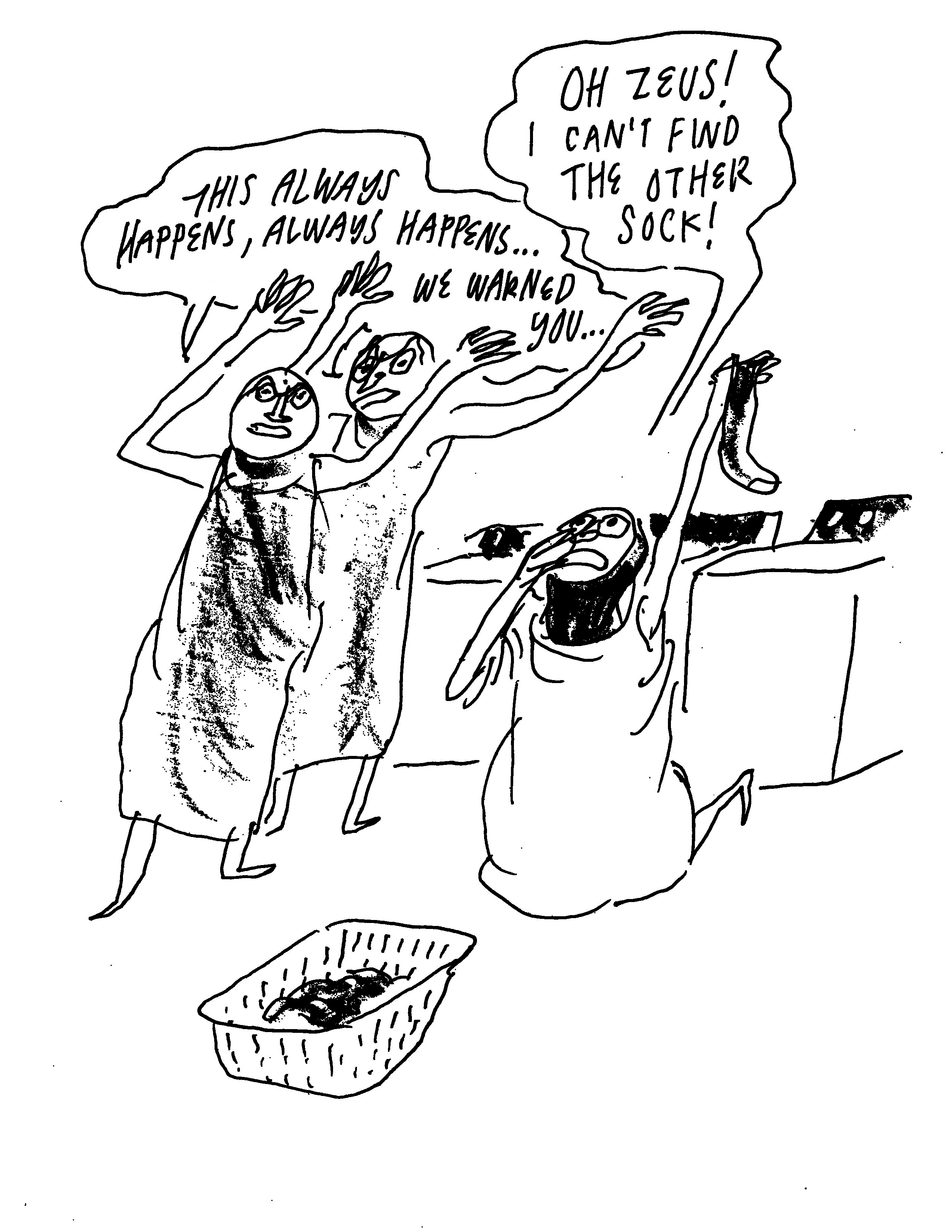
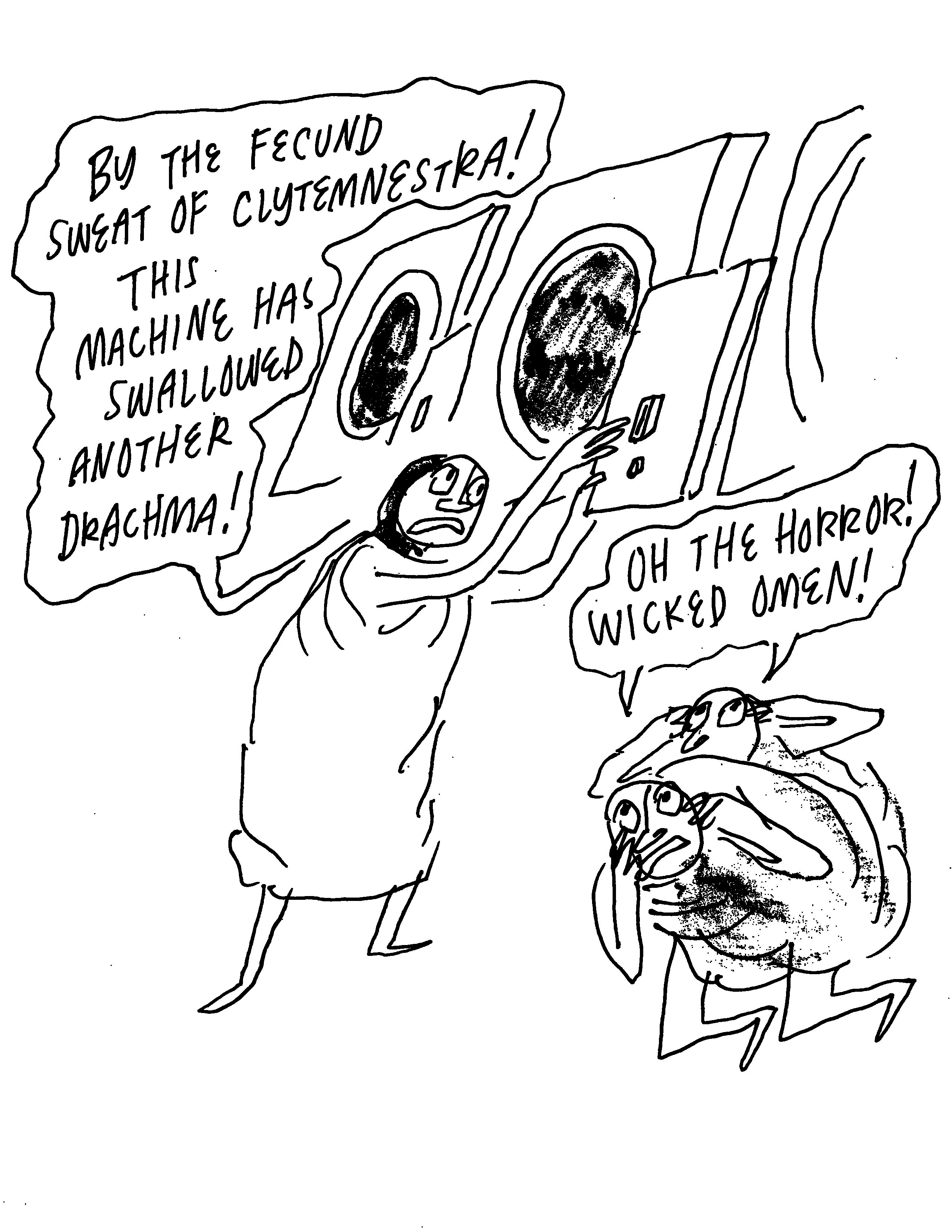
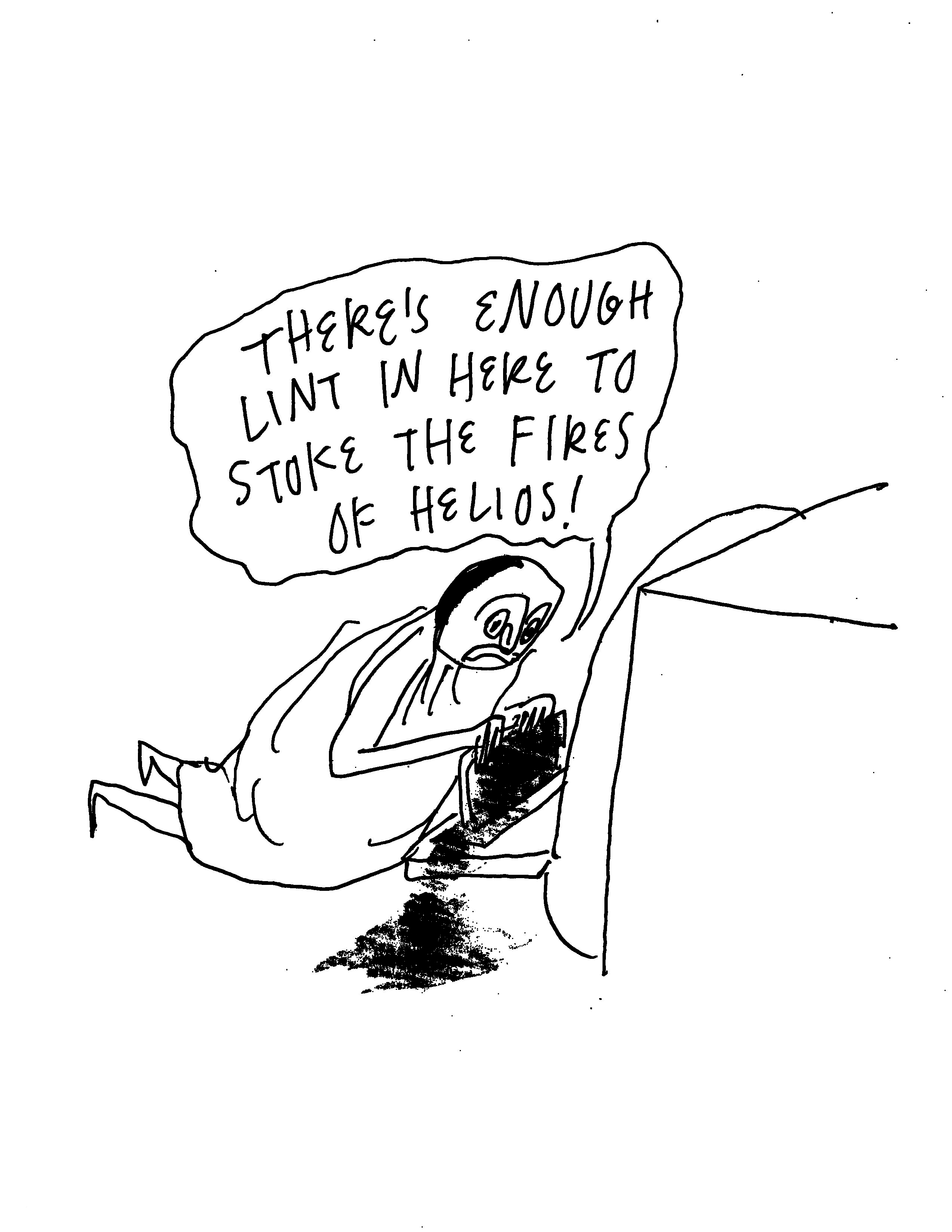
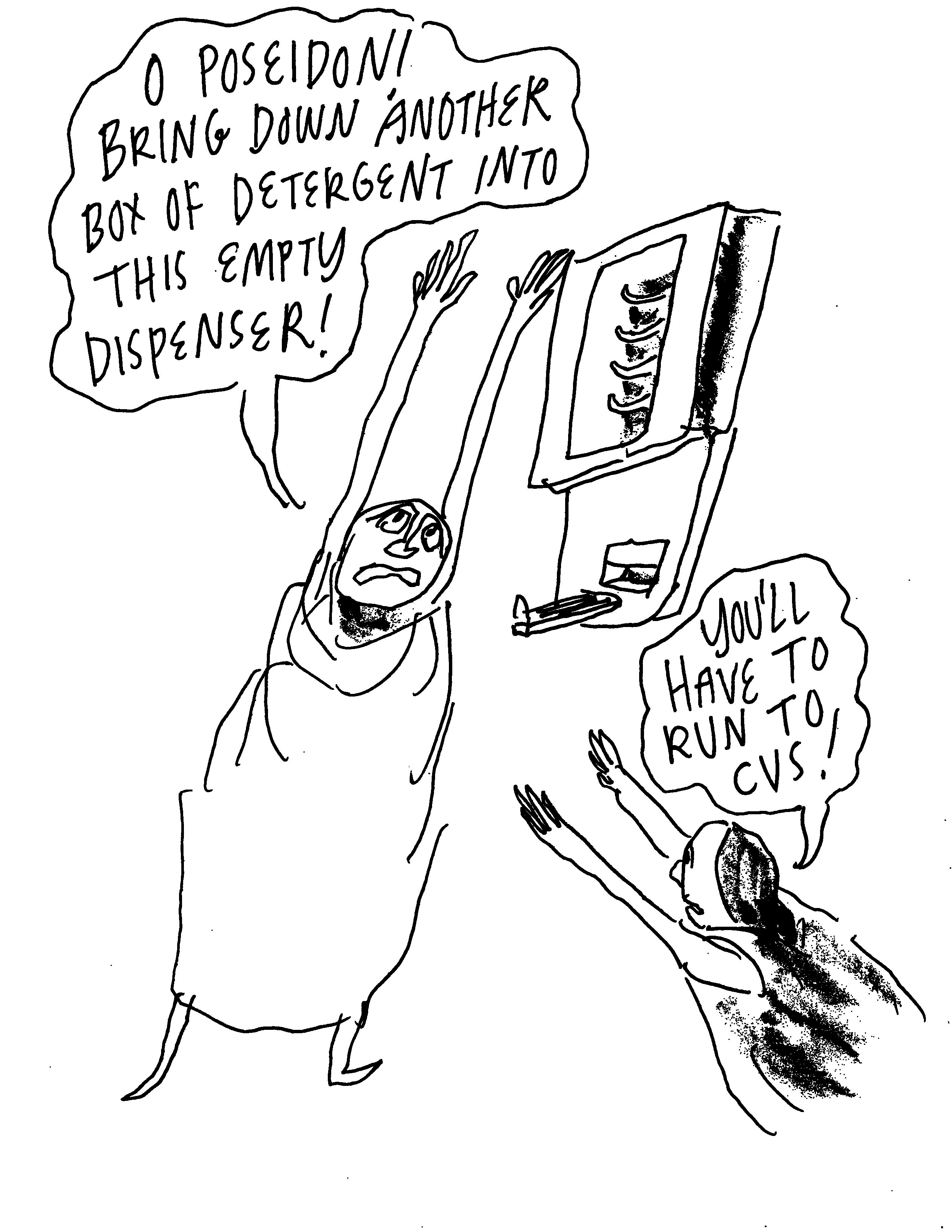
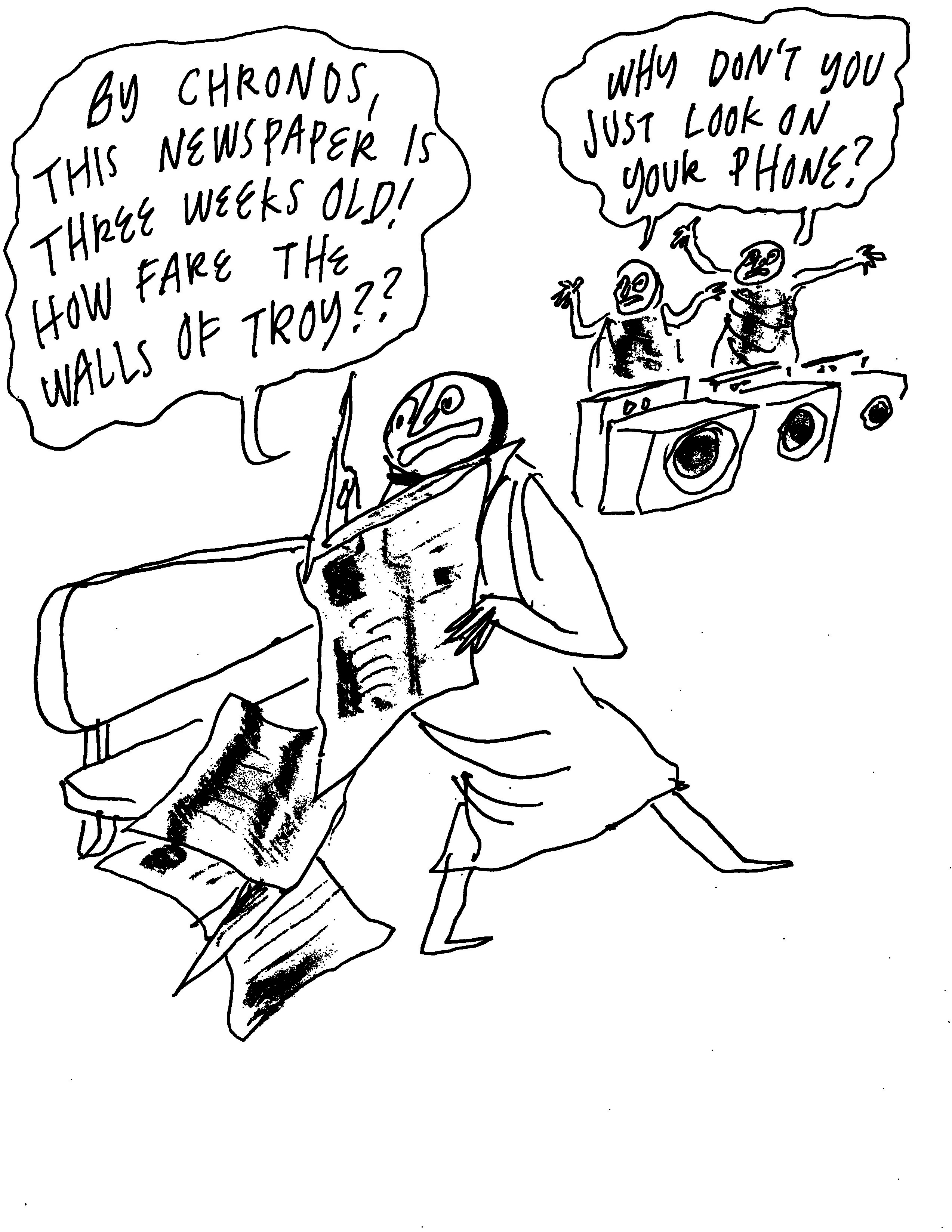
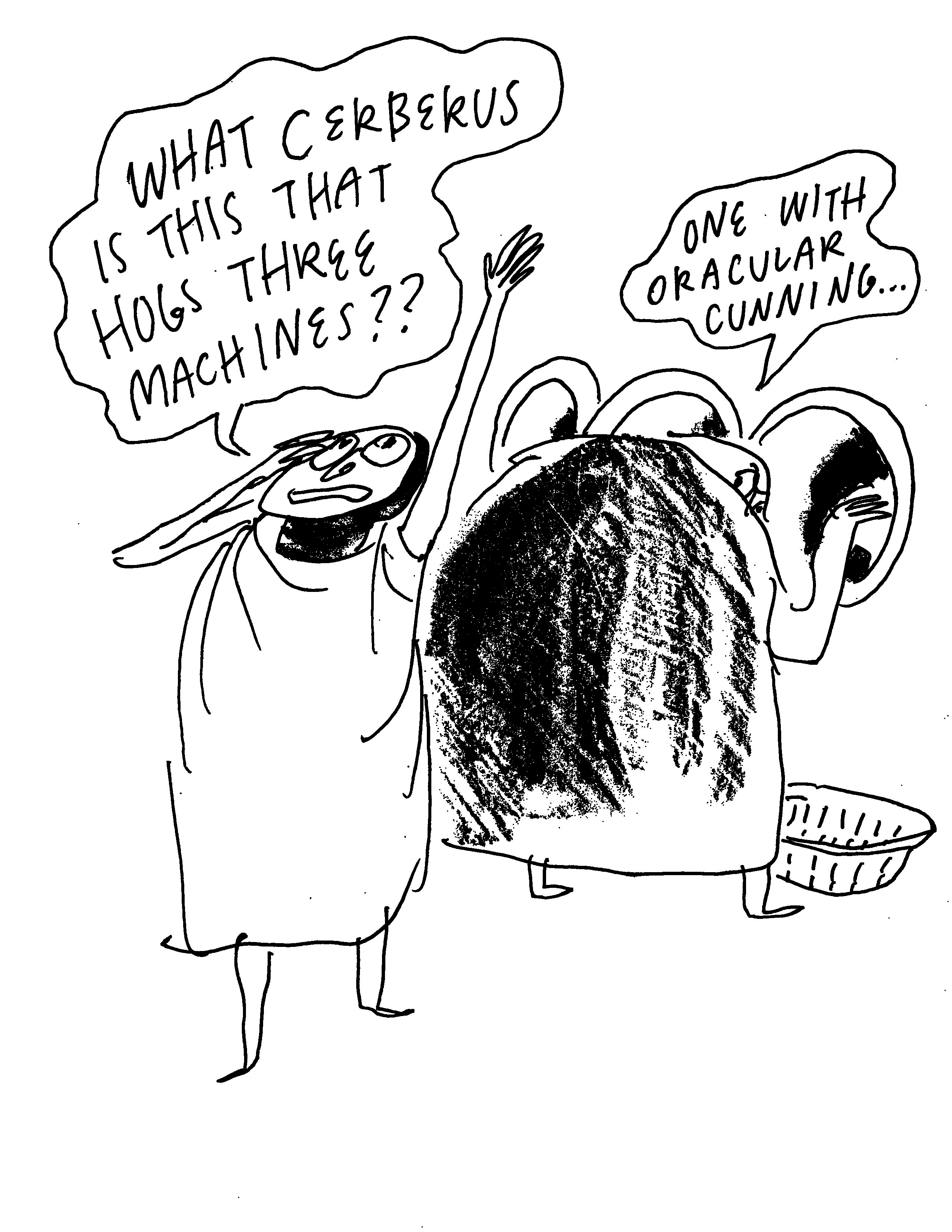
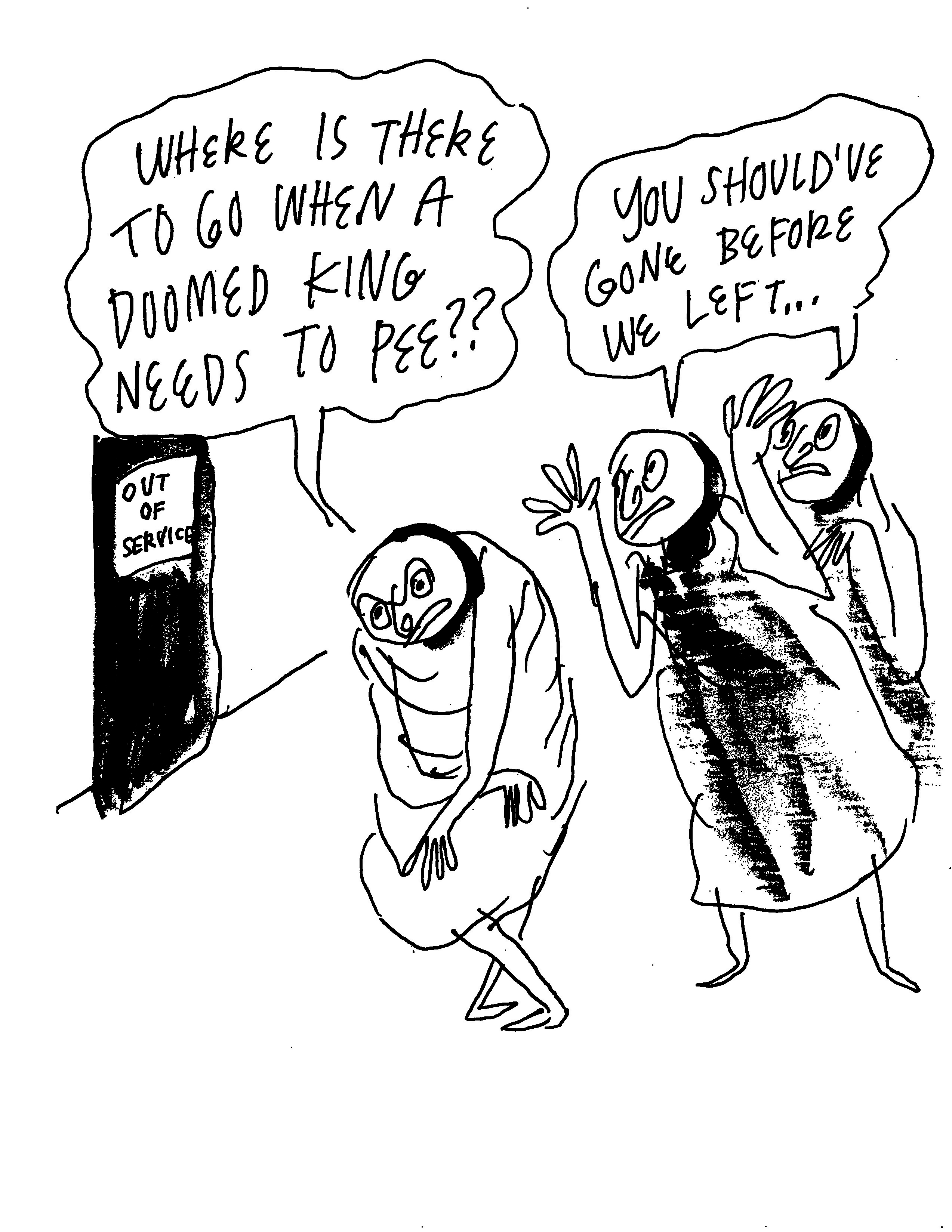
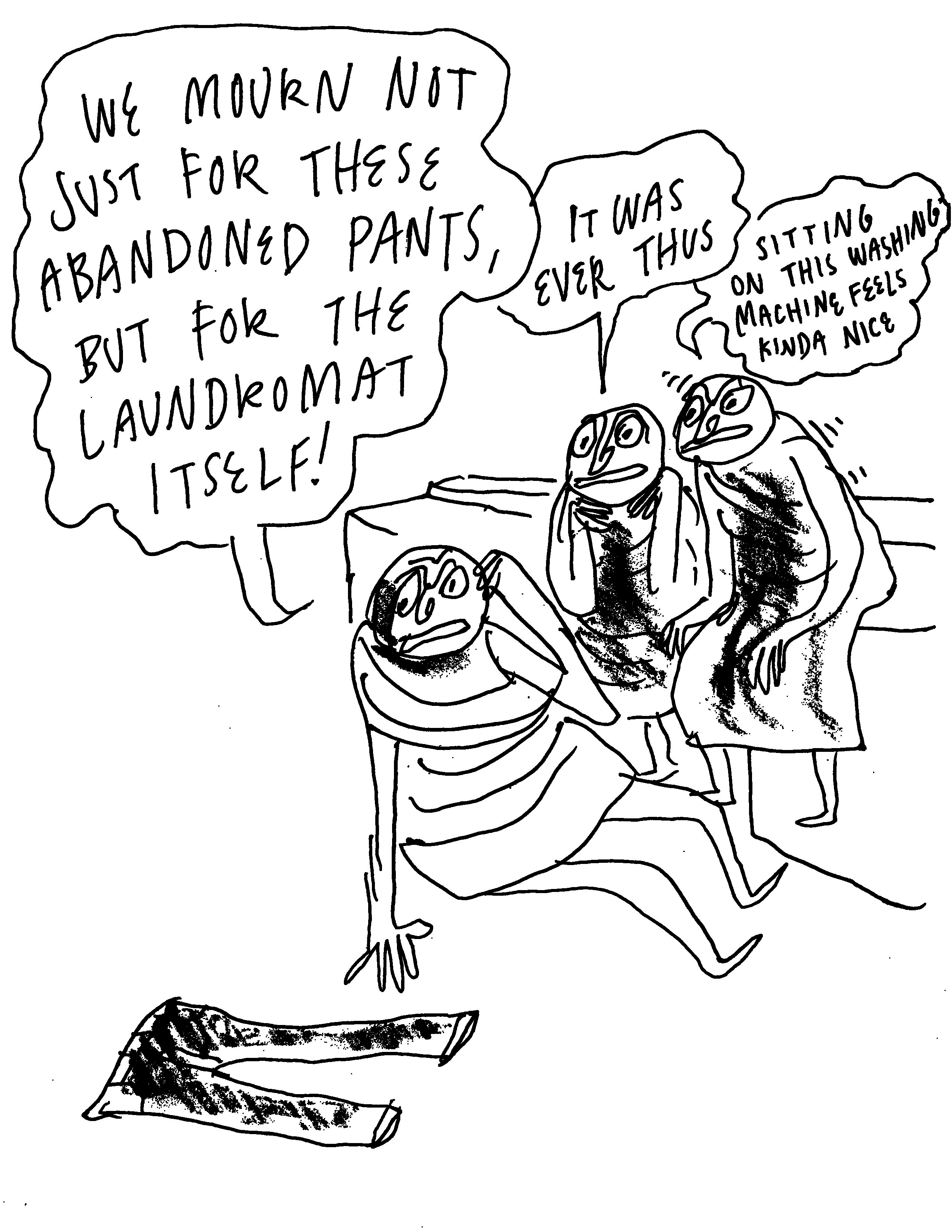
| Greek Tragedy in the Laundromat Posted: 29 Jun 2018 07:04 AM PDT 
Jason Novak is a cartoonist in Oakland, California. The post Greek Tragedy in the Laundromat appeared first on Guaripete. |
| Posted: 29 Jun 2018 07:04 AM PDT   From the Women's March on Washington. "Class of '36, I guess we did something wrong." This was what my grandmother wrote to her Barnard College classmates, fifty years after they had all graduated. My grandmother was charismatic and uncompromising, equally critical of capitalism and sentimentality. In her life as a Westchester housewife/radical leftist, she'd planned protests, played tennis, and published mystery novels. When her children were grown, she moved to Manhattan, waking every morning at five to walk briskly around Central Park (she was only mugged a few times.) She spent the rest of the day writing and tending the ivy she'd planted to beautify the trees along her block. Every Saturday she organized against US atrocities in Central America. Days before she died in 1992, while attached to an IV, a blood transfusion, and oxygen, she dictated the final paragraph of her eighteenth book to my mother. The book was, she explained, the first in a new series she planned to write. At her memorial, a week later, held in a classroom at Barnard College, her five children yelled and laughed and interrupted one another. She'd taught them to rebel against society's mawkish ceremonies, like memorial services, as well as its unjust institutions. Her children all inherited her radical politics, and they raised us, her twelve grandchildren, in the same mode. You can be anything, they joked, as long as it's a public defender. Interpreting this broadly, we complied. A month after the memorial, I received in the mail a thick, spiral-bound book of my grandmother's unpublished writing, compiled by my aunt. While most of the pages are filled with witty poems that my grandmother composed for celebrations, there is also a photocopy from her fiftieth reunion book, one of those alumni books to which you're invited to send in a list of your degrees and progeny along with a brief life update. But my grandmother didn't send in an update. She sent a condemnation in five sentences. "Anyone our age has to stand abashed at the state of the world," she begins. "For thirty or so years after we graduated, we felt, we may have been entitled to feel, vaguely self-congratulatory: if we preoccupied ourselves with such matters at all, we could assign to our efforts a small but perceptible effect; things were getting better. That comfortable illusion no longer seems to me possible. Put a finger anyplace on the globe today, and there is warfare, harassment, piles of dreadful weapons, appalling gaps between rich and poor." She finishes with her biting summation, the first-person plural opening its arms to include every alumna: "Class of '36, I guess we did something wrong." That despair in her words? I know it well. As a family of atheist Jews, our only god was cynicism. I'd been told my whole life: Work hard to change the world, but guess what? Despite your efforts, the world will grow increasingly fucked. Her words remind me, more than anything, of a picture book I read as a child, whose title I can now no longer recall. I've searched for it on the internet, to no avail. It was about an old, witchy woman who tried to rid the world of nighttime. With her broom, she swept frantically at the sky all night, resting victoriously when morning broke, only to be devastated when darkness fell again. I was horrified by the book's metaphoric implications. It was my earliest introduction to futility. As I became an adult, I tried, peripatetically and desultorily, to keep my grandmother's admonitions in mind. I attended protests and planned boycotts, but they were always clearly the wrong protests and boycotts, because all around me night continued to fall; things got worse. I grew angry, rolled my eyes at bumper stickers, at articles preaching to the choir, at everyone's insufficient efforts. Out of that rage, I began to write a novel. I moved to Manhattan, not far from my grandmother's block, where the ivy no longer grew. I wanted to write about being my grandmother's granddaughter, about inheriting an idealism laced with disillusionment. I wanted to explain how it felt to grow up with a feverish love for Woody Guthrie's anti-fascism and Cesar Chavez's hunger strikes and for linking arms at a protest, for singing "We Shall Overcome," and for that love to be tarnished, as if we stood under dark clouds that spelled out the words DOOM and NOT GOING TO HELP. The book began out of rage and, I'll admit, hubris—a youthful idealism. I remember a professor telling me that no novel could be written in less than two years. I nodded and inwardly disagreed, confident that I'd finish in a year, eighteen months tops, after which I'd finally go to school to become, in the narrowest sense, a public defender. In fact, it took me fifteen years to finish that book. I wrote other things during that decade and a half. I taught classes, raised babies. But still, intermittently for fifteen years I worked on draft after draft, each one somehow wrong. A strange thing happened to me during this time of failure. I'd begun the book furious about the end of idealism, but as the years passed, I began to understand that when idealism ends, well, that's when things get interesting. After all, you don't need to simply desist when disillusioned. No, you can show up for work anyway, not with earnestness or sentimentality (my grandmother would shudder at that), but with a buoyant sense of the absurd. It's absurd to write another draft of a book that isn't working. It's absurd to protest war after war after war. It's absurd to call our congressional representatives each morning to register our horror at yet another inhumane action of the Trump administration. But there's beauty in this absurdity and plenty of humor, too. For years, as I kept my grandmother's five sentences in mind, I was angry at myself and everyone else for not figuring out a way to do something unequivocally right. Now I'm keeping her actions in my mind instead. I'm beginning to understand what it means to live with an idealism conjoined with despair, with cynicism. It means you work despite futility. You go to a protest, shout alongside strangers, and come home to read the terrible news. You plot out your new series of mystery novels while dying in a hospital bed. It's easy, I see now, to write five lines of condemnation. We do it on Twitter every day. It's harder to live absurdly, as my grandmother did, to drag the folding table down to Greenwich Village to collect signatures on petitions that will most certainly not remove US death squads from El Salvador, to water the ivy even though one day it, too, will die. We fail and fail. We stand abashed. We are doing something wrong. But look how beautiful we are, as we keep sweeping the darkness back each night, to allow one more day to arrive. Heather Abel's debut novel, The Optimistic Decade, which is about idealism and disillusionment, is out now from Algonquin. The post What Comes After Idealism? appeared first on Guaripete. |




| You are subscribed to email updates from Books Trending News. To stop receiving these emails, you may unsubscribe now. | Email delivery powered by Google |
| Google, 1600 Amphitheatre Parkway, Mountain View, CA 94043, United States | |

No comments:
Post a Comment